Asia Under Pressure: The Double Blow of Oil Prices and Currency Weakness
Asia is absorbing the heaviest economic strain from the 2026 Hormuz disruption through imported energy inflation and mounting currency pressure.
OpenMacro
Asia is facing a dual shock from the 2026 Hormuz crisis: higher oil prices and weaker currencies. With much of the region’s crude imports passing through the Strait, rising energy costs, dollar strength, and FX pressure are threatening both growth and inflation stability.
While attention in the West has focused on Europe and the United States, Asia is bearing the brunt of the 2026 Hormuz crisis.
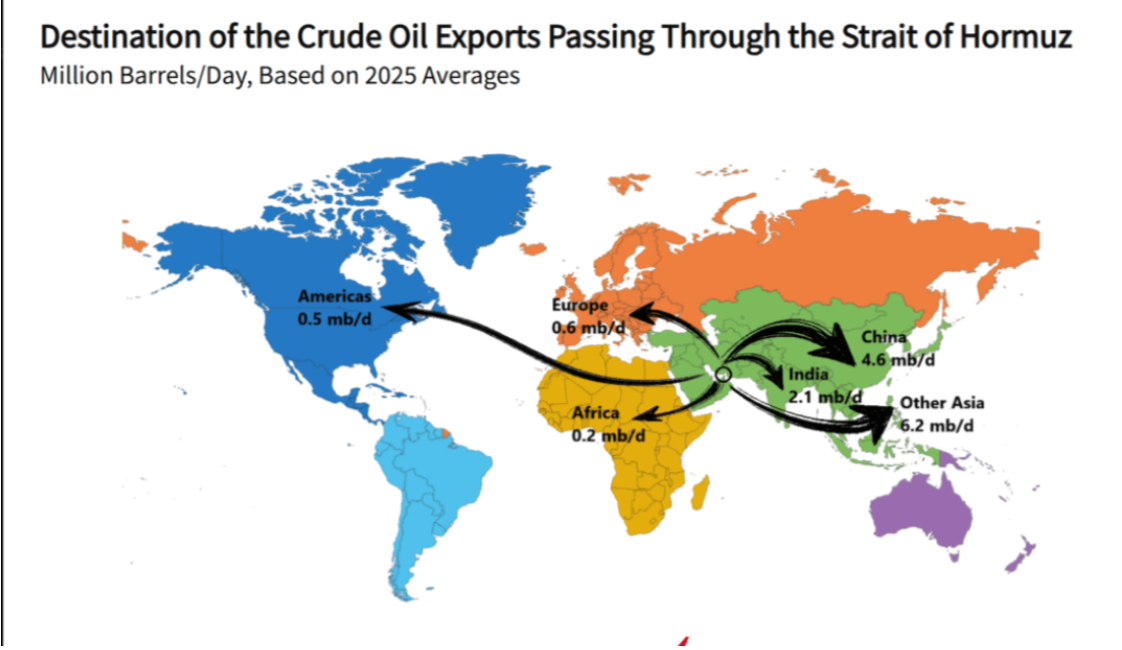
Between 80% and 90% of Asia’s crude oil imports flow through the Strait of Hormuz. The resulting price spike is creating imported inflation on a massive scale and putting intense pressure on local currencies, particularly the Indian rupee, Korean won, Indonesian rupiah, and Thai baht.
Economists have already downgraded 2026 growth forecasts for India, South Korea, Japan, and several Southeast Asian economies. A stronger US dollar is compounding the problem: higher oil bills must be paid in dollars, draining foreign reserves and forcing central banks to defend their currencies at the expense of domestic growth.
The impact is not limited to energy. Higher transportation and manufacturing costs are feeding into supply chains across the region, threatening corporate margins and consumer spending. Export-oriented economies like South Korea and Japan are particularly vulnerable because their major trading partners are also facing higher energy costs.
Asian policymakers are now caught in a classic policy dilemma: raise rates to defend currencies and fight inflation, or keep policy loose to support growth. Most have chosen a cautious middle path, but the room for maneuver is shrinking fast.
Bottom line: Asia is facing a painful double shock in 2026, expensive energy and weakening currencies. This combination threatens both inflation targets and growth momentum across one of the world’s most important economic regions.