US Miscalculation in the Iran Conflict: Hormuz Oil Shock and Inflation Pressure Force Early Negotiations Push
A strategy built around rapidly collapsing Iran’s oil revenues instead triggered an oil shock, inflation pressure, and an earlier-than-planned diplomatic pivot.
OpenMacro
The US strategy of rapidly squeezing Iran through blockade pressure backfired when Hormuz disruption pushed oil sharply higher and raised inflation and recession fears. Economic fallout forced a quicker move toward negotiations than policymakers had anticipated.
In early 2026, the United States launched a high-stakes naval blockade of the Strait of Hormuz and Iranian ports, confident that crippling Tehran’s oil exports would force a rapid collapse or major concessions. The strategy echoed past maximum-pressure campaigns and assumed Iran would buckle within weeks.
Instead, the outcome was far more complicated. Iran’s resilience, combined with a severe global oil shock, unleashed inflation and recession fears that quickly changed the political and economic calculus. By the second week of the full blockade, US officials were already pushing quietly for renewed negotiations, even as public messaging continued to frame every diplomatic move as a sign of strength.
The Strategic Error: Betting on a Fast Iranian Collapse
US planners assumed that a blockade enforced by warships, aircraft, and surveillance would cut off Iranian revenue quickly, much as earlier sanctions had sharply reduced exports between 2018 and 2021. Officials expected Tehran to lose the ability to sustain its economy and regional influence.
Instead, Iran had prepared several buffers. Shadow fleets, offshore storage, and commercial ties with China allowed at least partial evasion. More importantly, Iran’s prior disruption of the Strait of Hormuz, in response to earlier strikes, created a global oil shock that backfired on nearly everyone, including Washington.
The miscalculation resembled earlier episodes of overconfidence in fast regime-change dynamics. Initial projections underestimated Iran’s ability to withstand pressure through smuggling, domestic adaptation, and strategic patience. Once the blockade intensified in mid-April, ship traffic dropped sharply, but the broader market reaction exposed the fragility of the strategy.
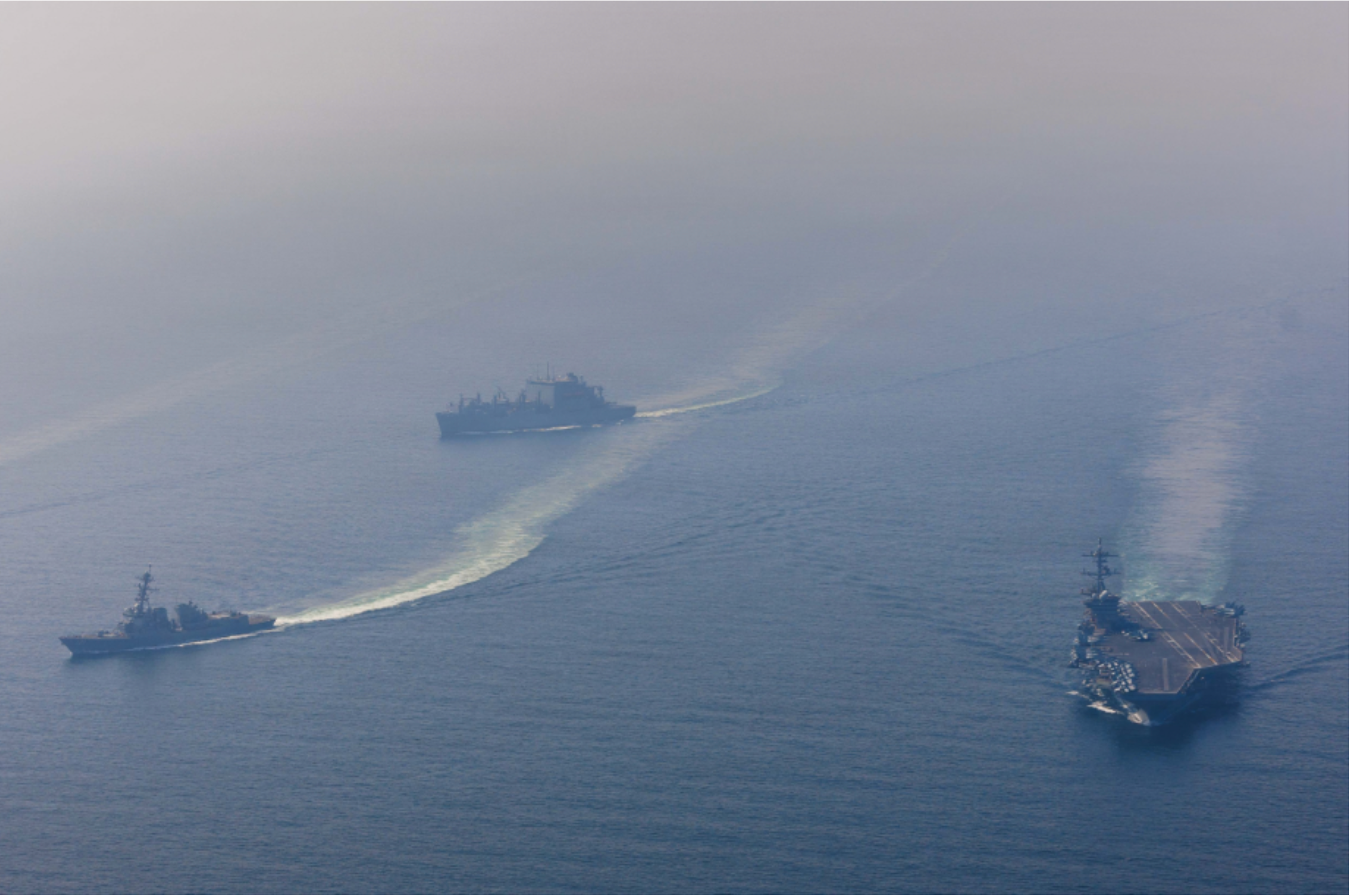
Figure 1
Maritime enforcement in and around Hormuz turned a pressure campaign into a global oil and inflation shock.
Source: OpenMacro
Hormuz Chaos Triggers US Inflation and Recession Fears
The Strait of Hormuz carries roughly one-fifth of global oil supply. Iran’s disruption, followed by US counter-blockade enforcement, sent Brent crude above $100 per barrel in March and April 2026, with prices up dramatically from pre-escalation levels. US gasoline prices surged in response, helping drive a sharp monthly rise in consumer inflation.
The IMF warned that a prolonged restriction of Hormuz traffic could materially weaken global growth and raise recession risk through energy-market spillovers, supply-chain stress, and higher costs for everything from food to manufacturing.
Domestic political and economic pressure mounted quickly. Consumer confidence weakened, financial markets turned more volatile, and inflation-sensitive sectors came under renewed stress. Even countries the US needed diplomatically, including India and China, faced serious energy-security risks, complicating the broader strategy.
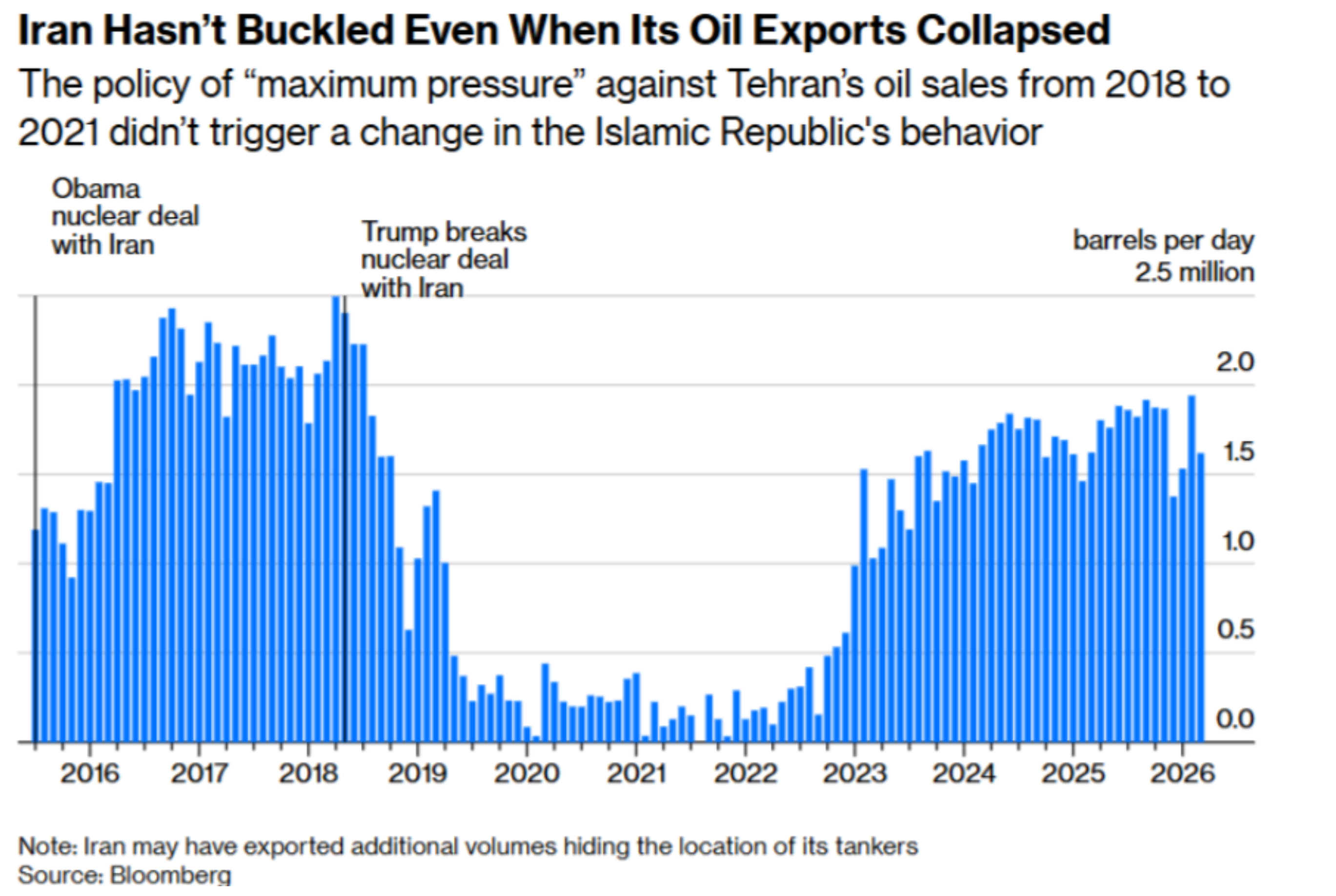
Figure 2
Earlier maximum-pressure campaigns sharply reduced Iran’s exports, but they did not produce a decisive strategic collapse.
Source: Bloomberg
By Week Two: Economic Pain Forces Urgent Calls for Talks
The blockade was intended to be a short, decisive tool. Instead, within two weeks, surging energy costs and recession concerns pushed the Trump administration toward de-escalation. Failed talks in Pakistan were followed by quieter signals that negotiations would resume soon. Iran floated nuclear-related concessions, while the US pressed for broader terms, but the underlying reality was clear: the economic timeline was moving faster than the strategic one.
Internal US assessments increasingly highlighted the domestic risk. Prolonged Hormuz restrictions could push the economy toward a meaningful slowdown. Publicly, the administration downplayed the domestic cost, but privately it was already searching for a face-saving off-ramp.
Ceasefire extensions and renewed diplomatic channels thus emerged not purely from strength, but from the mounting pressure of inflation data, volatile energy prices, and financial-market stress.
The Political Imperative: Selling It as Victory
Even as negotiations accelerated, the administration worked to frame developments as a strategic success. Officials argued the blockade had halted Iranian trade, increased pressure on Tehran, and demonstrated US leverage. Any pause in hostilities or resumption of diplomacy was presented as proof that maximum pressure had worked.
But the underlying timeline suggested something more complicated. The blockade did hurt Iran, but it also inflicted broad economic pain through energy markets and inflation. The public narrative emphasized victory; the private reality pointed to tactical adjustment under economic duress.
This gap between rhetoric and reality is central to understanding the episode. What was sold as a quick knockout instead became a hurried diplomatic pivot shaped heavily by macroeconomic blowback.
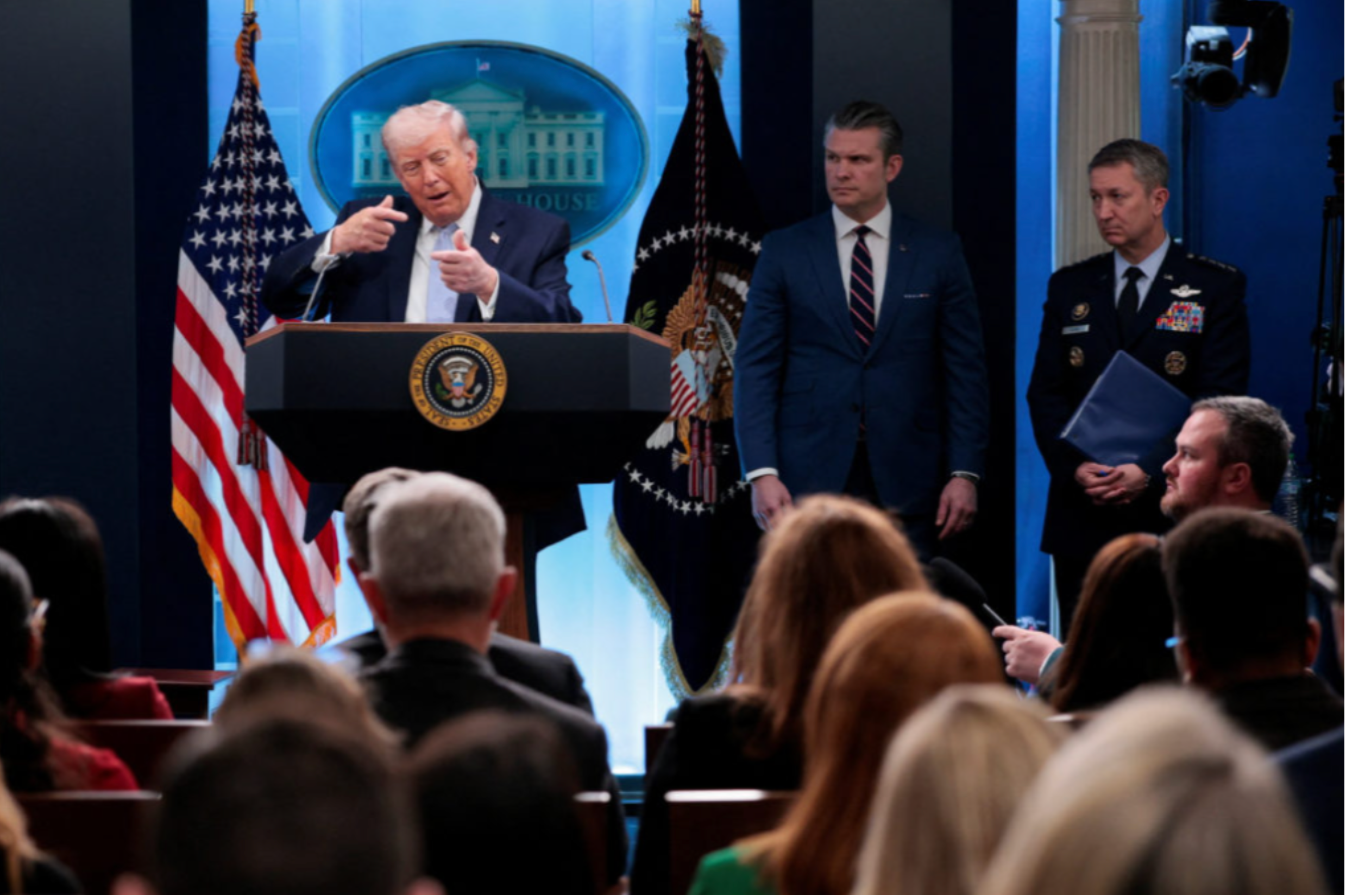
Figure 3
Public messaging continued to project strength even as economic costs pushed policymakers toward negotiations.
Source: OpenMacro
Conclusion: Lessons from a High-Stakes Gamble
The United States entered the confrontation expecting swift results from a blockade-driven squeeze on Iran’s oil exports. Instead, Iran’s ability to disrupt Hormuz and withstand pressure triggered a global oil shock that fed directly into inflation, recession fears, and domestic political risk in the United States.
By the second week, economic realities had already forced a partial rewrite of the strategy. The administration still needed to present every diplomatic turn as a victory, but the deeper lesson was clear: Washington had underestimated how quickly a regional pressure campaign could turn into a global economic problem.
The miscalculation was not that Iran would feel pain. It was that the US and its partners would not feel enough pain themselves to force a strategic adjustment. In that sense, the push toward negotiations was not simply a choice. It was a response to the market and inflation consequences of the strategy itself.