Economic Conditions in Germany 2026 – Weak Growth, Energy Shocks, and Severe Crisis
Germany’s weak recovery is being undermined by higher energy costs, softer exports, and renewed fiscal pressure as geopolitical shocks ripple through Europe.
OpenMacro
Germany’s 2026 outlook has weakened as energy shocks from the Iran conflict weigh on industrial activity, confidence, and fiscal balances. Growth forecasts have been cut, inflation revised higher, and the broader recovery remains fragile.
The global economy in 2026 continues to grapple with geopolitical tensions, particularly the conflict involving Iran, which has triggered energy price shocks and disrupted trade.
Two starkly different but interconnected cases highlight the challenges: Germany’s sluggish, near-stagnant recovery and Iran’s profound economic deterioration marked by hyperinflation and currency collapse.
Germany: Downward Growth Revisions and Rising Inflation Pressures
Europe’s largest economy has faced structural headwinds for years, including weak exports, demographic pressures, and slow progress on digital and green transitions. After minimal growth of around 0.2% to 0.3% in 2025, forecasts for 2026 have been sharply revised lower.
Leading economic institutes now project GDP growth at only 0.6% for 2026, down from earlier estimates of 1.3%, with a modest 0.9% expected in 2027. The primary culprit is the energy price surge stemming from the Iran conflict, which has increased costs for oil and natural gas and weighed on industrial activity and consumer confidence.
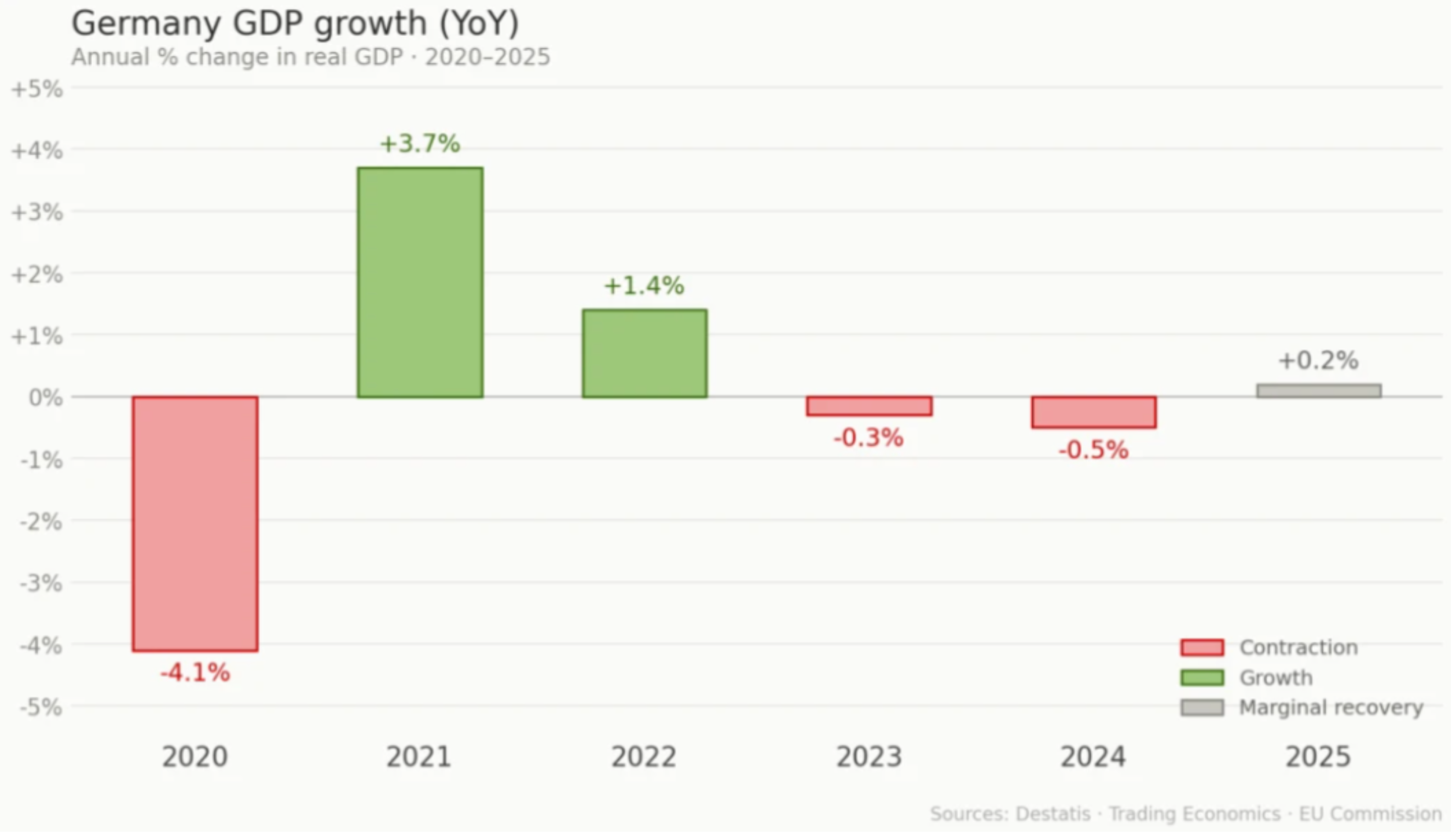
Figure 1
Germany’s growth profile has remained fragile, with repeated setbacks leaving the economy close to stagnation.
Source: Destatis; Trading Economics; EU Commission
Germany GDP Growth, year over year, from 2020 to 2025: the chart shows repeated contractions and weak recoveries, underscoring the pattern of stagnation.
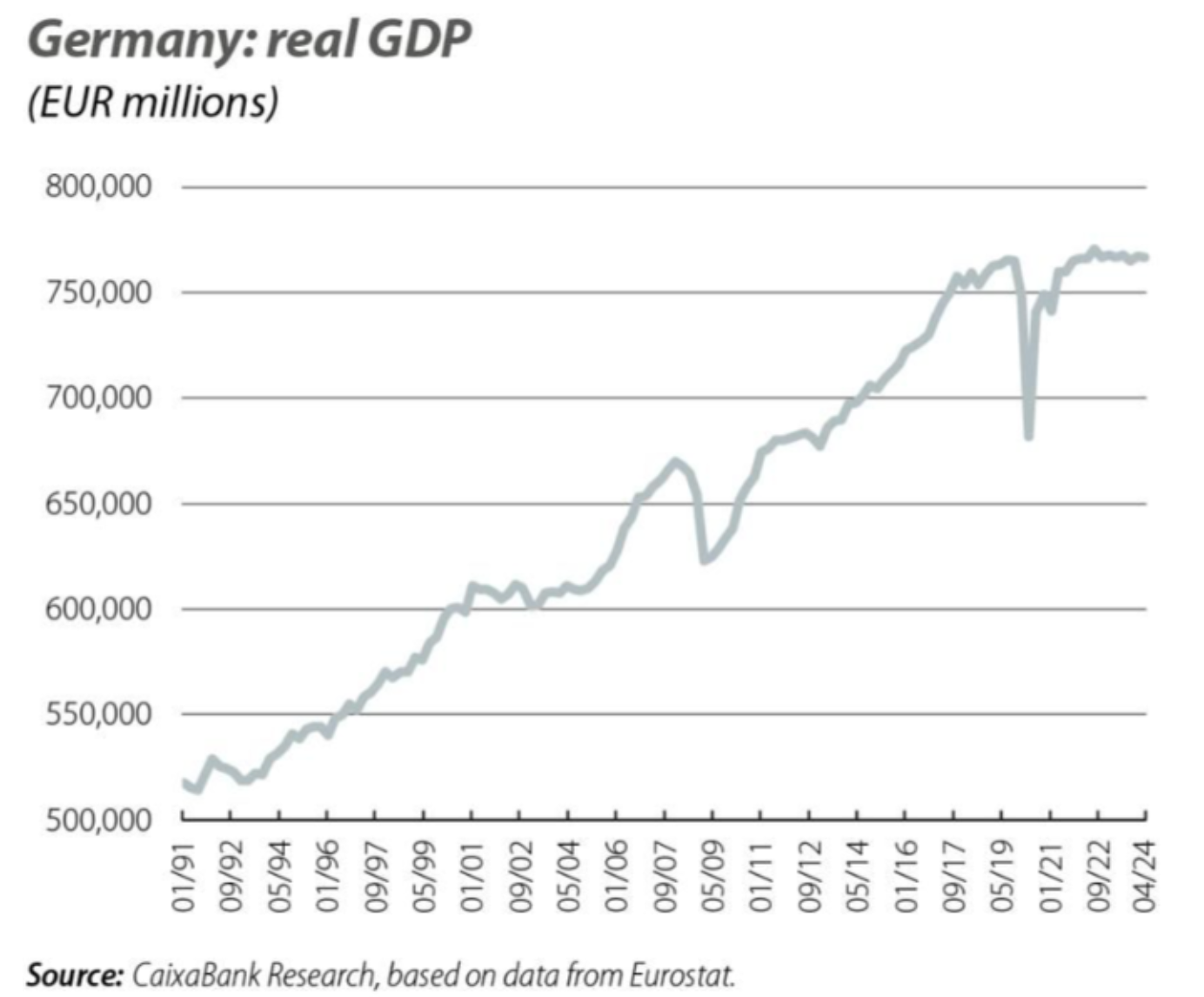
Figure 2
Germany’s long-run GDP trend shows modest expansion but also repeated sensitivity to external shocks and cyclical slowdowns.
Source: CaixaBank Research, based on data from Eurostat
Long-term real GDP trend in Germany: illustrating the slow overall expansion and vulnerability to shocks.
Inflation in Germany has also been revised upward to around 2.8% for both 2026 and 2027, higher than previous projections of 2.0% to 2.3%. Services and domestic factors, including wages in care and healthcare, remain key drivers, while energy costs add temporary upward pressure.
The government deficit is widening significantly, projected to reach 3.7% - 4.2% of GDP, due to increased spending on defense, infrastructure, energy support, and fiscal stimulus to cushion the impact.
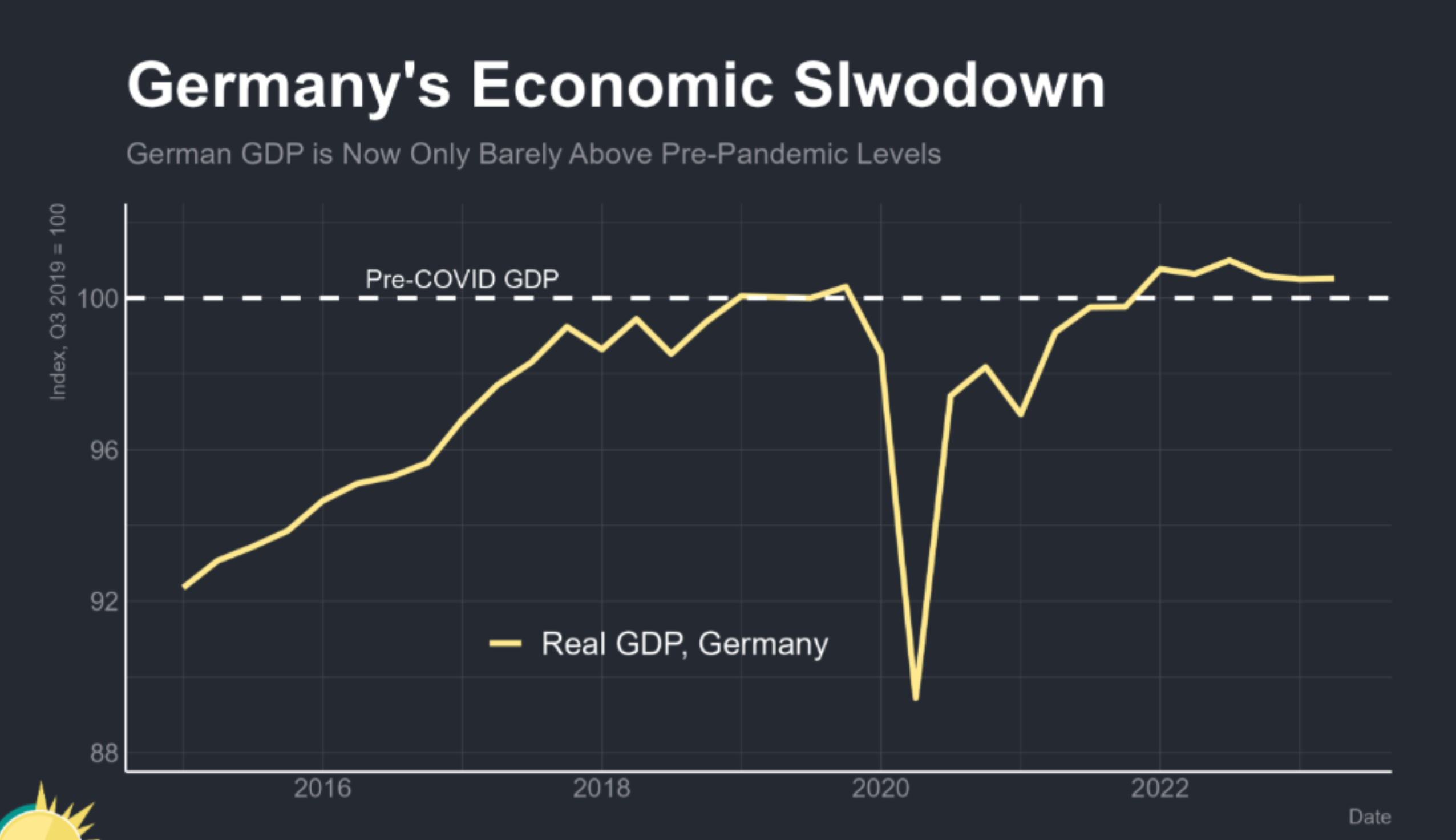
Figure 3
Germany’s economy has struggled to build momentum, with GDP only barely above its pre-pandemic level in recent years.
Source: OpenMacro
Germany’s economic slowdown chart shows GDP barely above pre-pandemic levels in recent years.
Business sentiment and export performance have softened, though expansionary fiscal policy provides some offset. Unemployment remains relatively stable but shows signs of softening, while corporate insolvencies have risen. Overall, Germany’s economy is in a phase of low-growth potential, with the Iran-related energy shock exacerbating vulnerabilities and delaying a stronger rebound.
Germany contends with slow growth, higher fiscal costs, and temporary inflation bumps from energy shocks, while Iran faces an existential economic meltdown involving hyperinflation, currency crisis, and revenue collapse.
These developments underscore the far-reaching effects of geopolitical events on global energy markets, trade, and economic stability. Higher oil prices ripple into Europe, affecting Germany’s industry, and exacerbate Iran’s vulnerabilities. Both cases illustrate the challenges of navigating 2026’s uncertain environment, where energy security, fiscal policy, and external shocks play outsized roles.