Egypt’s Smart FX Defense: Record Reserves and Greater Flexibility in a Volatile Region
Record reserves and a more flexible exchange-rate strategy are helping Egypt absorb regional shocks without repeating past FX policy mistakes.
OpenMacro
Egypt has entered the latest regional shock with record FX reserves and a more flexible currency strategy. By allowing the pound to adjust while intervening selectively, the central bank is preserving reserves, reducing confidence risks, and signaling disciplined macro management.
gypt has emerged as one of the more pragmatic emerging-market managers during the current Middle East crisis. At the end of March 2026, the country’s net international reserves reached a new all-time high of $52.83 billion, according to Central Bank of Egypt data.
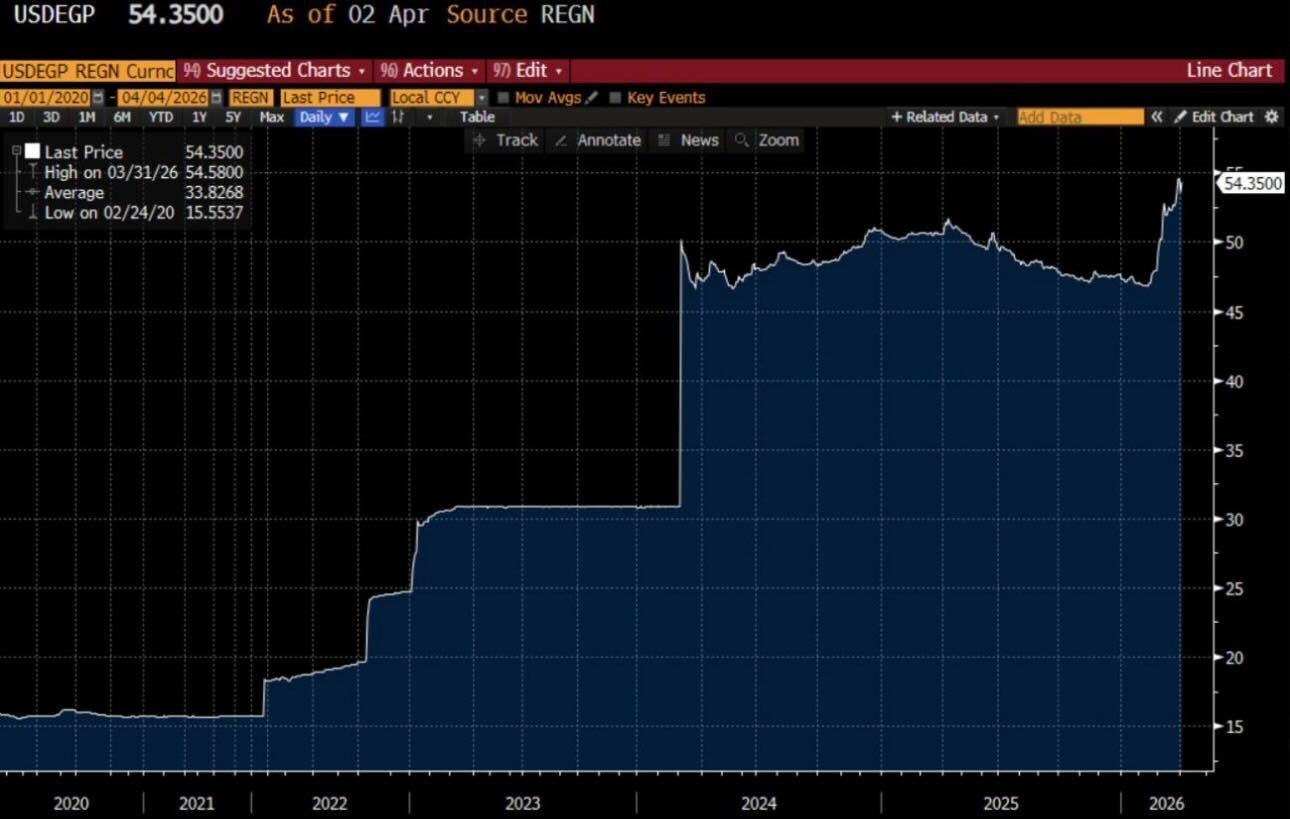
Despite intense regional pressure, with the war in Iran pushing the USD/EGP spot rate toward the 53.5 to 54.3 zone, the Central Bank has adopted a more sophisticated approach than in previous crises. Instead of heavy daily intervention to defend a rigid peg, authorities are allowing greater exchange-rate flexibility while using reserves selectively to smooth excessive volatility.
This strategy is preserving Egypt’s external buffer at healthy levels. The current stock of reserves covers approximately 6.5 to 7 months of imports, a solid cushion by emerging-market standards. By avoiding aggressive reserve burn, the Central Bank is maintaining ammunition for genuine shocks while letting the currency absorb part of the external pressure.
The approach reflects lessons learned from earlier balance-of-payments crises. Rather than exhausting reserves in a futile attempt to hold an unrealistic level, the CBE is prioritizing stability over rigidity. This managed flexibility helps prevent a sudden depletion of reserves that could trigger a loss of confidence, while still providing enough support to avoid disorderly depreciation.
In a region experiencing sharp oil-price swings and shipping disruptions through the Red Sea and Suez Canal, Egypt’s strategy stands out as measured and credible. The combination of record reserves and selective intervention signals to investors and rating agencies that macroeconomic management remains disciplined even under extreme external stress.
The coming months will test this framework further. If regional tensions ease and oil prices moderate, the EGP should find a more stable footing. Until then, Egypt’s central bank appears well-positioned to navigate the storm without repeating past mistakes of over-intervention or reserve exhaustion.