Europe Braces for Prolonged Stagflation Risk if Middle East Conflict Drags On
levated oil and gas prices are reviving stagflation fears across Europe, especially in energy-intensive manufacturing economies.
OpenMacro
Europe faces renewed stagflation risk if Middle East tensions keep oil above $100. Higher energy costs are pressuring industry, households, and ECB policy, raising the likelihood of weaker growth and more persistent inflation across the continent.
European economies are facing renewed downside risks as the fragile U.S.-Iran ceasefire shows signs of strain, keeping oil prices elevated above the $100 mark.
If the conflict persists and energy prices remain at current levels, the continent could slide into a prolonged period of stagflation, high inflation combined with weak growth.
Europe, though less dependent on Middle Eastern oil than in previous decades, still feels significant spillover effects through global energy markets. Natural gas prices have also climbed in sympathy, adding to costs for industry and households.
Germany, Italy, and other manufacturing-heavy nations are particularly exposed, with energy-intensive sectors such as chemicals, steel, and autos already reporting margin compression.
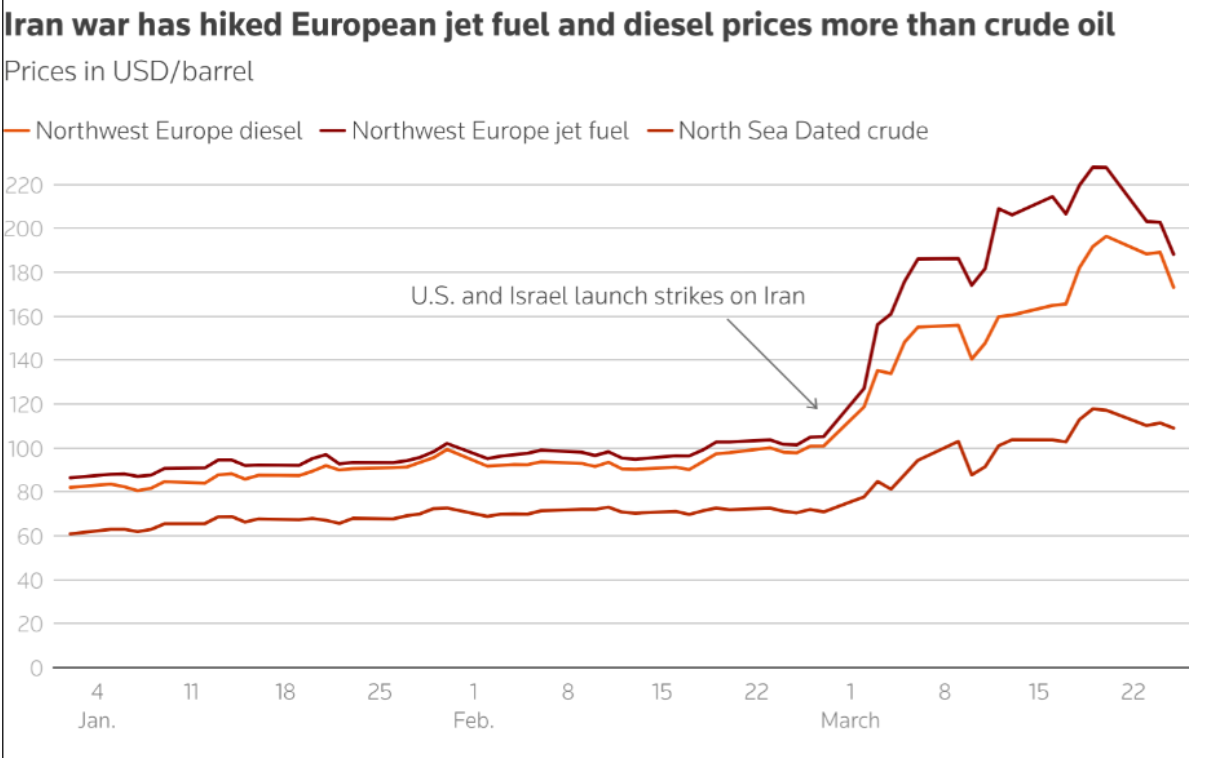
Figure 1
A line chart comparing Northwest Europe diesel, jet fuel, and North Sea dated crude prices, showing refined fuel prices rising more sharply than crude after the Iran conflict escalated.
Source: OpenMacro
The European Central Bank finds itself in a difficult position. While headline inflation has eased from 2022 peaks, a new energy shock threatens to push core inflation higher and keep it above target for longer.
Several ECB members have signaled that rate cuts expected later in 2026 may need to be delayed or scaled back if oil prices do not moderate.