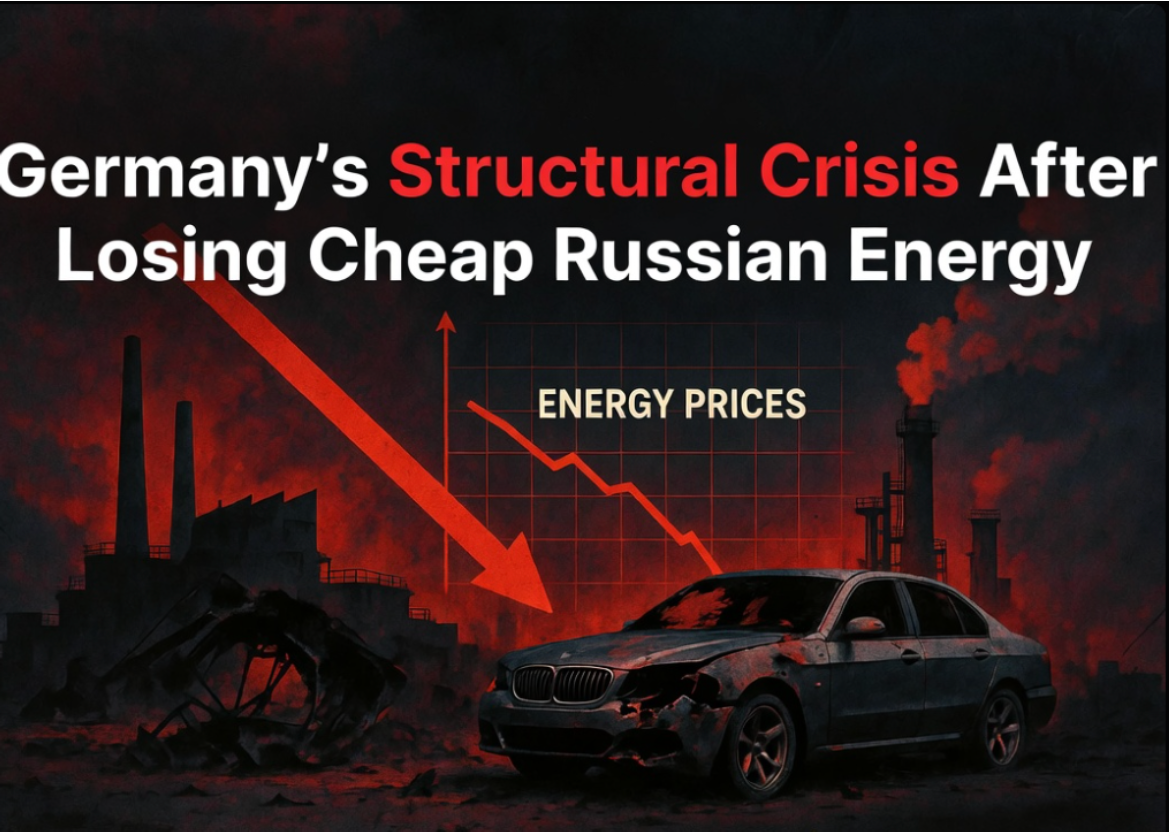
Germany’s Structural Crisis After Losing Cheap Russian Energy
Germany’s post-Russia energy shock is no longer cyclical; it is reshaping the country’s industrial competitiveness and weakening the wider eurozone.
OpenMacro
Germany’s industrial model was built on cheap Russian gas, and that advantage has disappeared. With energy prices still far above pre-crisis levels and domestic demand weakening, the country now faces a structural competitiveness problem that risks dragging down the broader eurozone.
Germany’s industrial powerhouse status was built on one simple advantage: cheap Russian natural gas. That era ended abruptly, and the consequences are now structural, not cyclical.
Energy prices remain roughly three times higher than pre-crisis levels. What was once a decisive cost edge, powering everything from chemicals to autos, has vanished. The result is a permanent loss of competitiveness that no fiscal stimulus can easily reverse.
Retail sales data released this week confirm the damage: February sales fell 0.6% month-on-month, missing expectations of a 0.3% gain. This marks the second consecutive decline and arrived even before the latest geopolitical shocks. As analyst Holger Zschaepitz noted, the weakness is already baked in.
Marcos Agustín frames the situation clearly: without restoring a low-cost energy base, Germany’s trade surplus and national income will continue to shrink. Europe’s largest economy is now structurally uncompetitive, dragging the entire eurozone with it.
For WebApp users tracking European macro data, Germany remains the bellwether. Watch industrial production, export orders, and any new energy policy announcements; they will determine whether Europe’s industrial heartland can rebound or remains stuck in its post-Russia reality.