The Real Economic Damage Caused by 2025–2026 U.S. Tariffs
The expanded U.S. tariff regime has raised prices, slowed growth, disrupted supply chains, and weakened export performance.
OpenMacro
The 2025–2026 U.S. tariff regime has imposed clear short-term costs on the economy through higher inflation, weaker growth, costlier consumer goods, and export losses from retaliation. Whether those costs deliver lasting strategic gains remains highly uncertain.
Tariffs were one of the most controversial economic policies of the new administration. While intended to protect American industries and reduce the trade deficit, the broad tariffs implemented in late 2024 and expanded in 2025 have inflicted measurable damage on the U.S. economy.
Quantified Economic Impact, as of April 2026:
- Inflation boost: +0.4% to +0.6% to headline CPI
- GDP drag: estimated -0.3% to -0.5% annualized growth
- Consumer cost: average household paid an extra $780 to $1,200 annually
- Export losses: U.S. agricultural and manufacturing exports down 9% to 14% due to retaliation
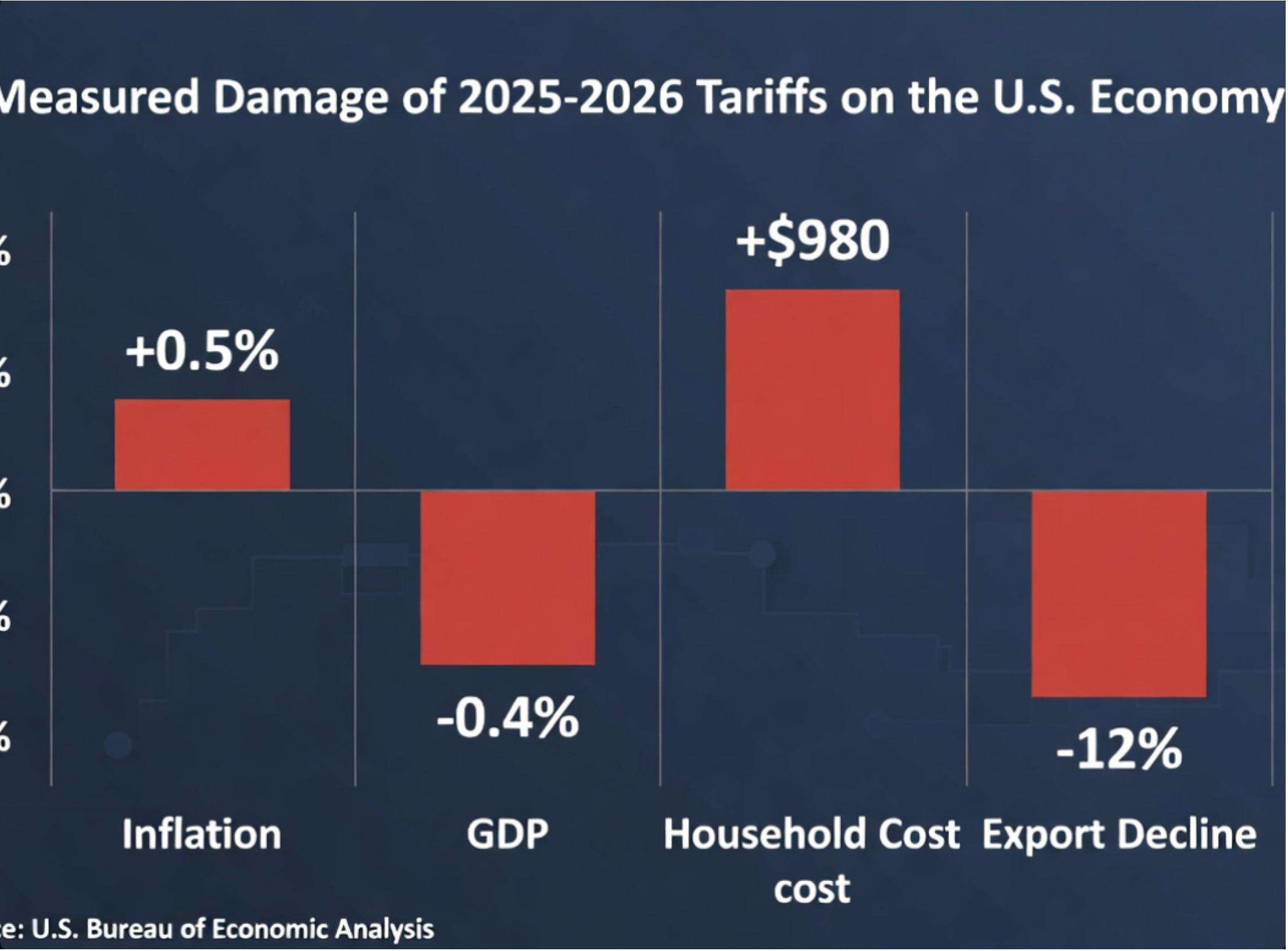
Figure 1
The tariff regime imposed a clear short-term cost through higher inflation, weaker growth, more expensive household goods, and lower exports.
Source: U.S. Bureau of Economic Analysis
How Tariffs Hurt the U.S. Economy:
1. Higher Prices for American Consumers and Businesses
Tariffs act as a tax on imports. When the U.S. raised duties on steel, aluminum, electronics, apparel, and auto parts, domestic companies faced higher input costs. Many passed these on to consumers, contributing directly to sticky inflation even as the Fed fought to bring it down.
2. Retaliatory Tariffs from Trading Partners
China, the EU, Canada, and Mexico responded with their own tariffs on U.S. goods, especially agricultural products such as soybeans, pork, and whiskey, as well as aircraft and machinery. American farmers and exporters were among the hardest hit, with some sectors seeing double-digit revenue declines.
3. Supply Chain Disruptions and Higher Production Costs
Many U.S. manufacturers rely on global supply chains. Tariffs forced companies either to absorb higher costs or to reshore production, a process that takes years and requires major investment. In the short term, this created shortages and delayed projects across autos, construction, and consumer electronics.
4. Reduced Business Investment and Slower Job Growth
Uncertainty around trade policy made companies hesitant to invest in new factories or expand capacity. Several major corporations cited tariff volatility in their 2025 earnings calls as a reason for pulling back capital expenditure plans.
5. Damage to the Strong Dollar and Export Competitiveness
While the dollar remained relatively strong, the net effect of tariffs was a less competitive U.S. export sector. This hurt multinational companies and contributed to a wider current-account deficit than many economists had forecast.
Longer-Term Strategic Trade-Offs
Supporters argue tariffs will eventually encourage domestic production and reduce reliance on China. However, most independent economists, including those at the Peterson Institute, Moody’s, and the IMF, conclude that the short-term costs outweigh any near-term benefits.
Consumer and Political Fallout
Higher prices on everyday goods such as clothing, electronics, and cars have contributed to voter frustration with inflation. Polling in early 2026 showed that a majority of Americans viewed tariffs as contributing to higher living costs.
The Bottom Line
The 2025–2026 tariff regime has delivered a clear short-term economic cost: higher inflation, slower growth, more expensive consumer goods, and retaliatory losses for exporters. Whether these policies will generate the longer-term strategic gains their supporters claim remains one of the biggest economic questions of the decade.