US Strategy of Blocking Iran's Oil Exports: Iran's Heavy Dependency and the Long-Term Economic Fallout
Because oil exports sit at the center of Iran’s budget, reserves, and currency stability, blocking them can inflict deep and lasting economic damage.
OpenMacro
Blocking Iran’s oil exports targets the core of its economy. Because oil revenues underpin the budget, foreign-exchange inflows, and rial stability, sustained disruption can worsen fiscal stress, accelerate inflation, and deepen long-term economic isolation.
Iran’s economy has long been tethered to its vast oil reserves, making oil exports the backbone of government revenue, foreign-currency earnings, and overall economic stability. A strategy of blocking these exports, whether through sanctions, naval enforcement in the Strait of Hormuz, or broader international pressure, is designed to deprive the regime of a critical funding source.
Iran’s Deep Dependency on Oil Exports. Oil is not merely another export for Iran; it is central to state finances. In 2024 and 2025, crude exports averaged roughly 1.5 to 1.6 million barrels per day, with peaks above 2 million barrels per day in early 2025, much of it shipped to China through shadow-fleet networks designed to evade sanctions.
These exports generated tens of billions of dollars annually, including around $43 billion in 2024, accounting for roughly 57% of total export revenues and more than 25% of GDP. Oil and gas revenues have frequently made up 25% to 45% or more of the government budget, helping fund subsidies, state operations, military activity, and regional influence networks.
The National Iranian Oil Company and related institutions rely heavily on these flows, even as some revenue streams are redistributed through opaque channels. Without oil income, Iran faces severe difficulties importing essential goods, stabilizing its currency, or sustaining fiscal operations. Prior estimates suggest Tehran would need extraordinarily high oil prices to fully balance its budget, far above typical global levels.
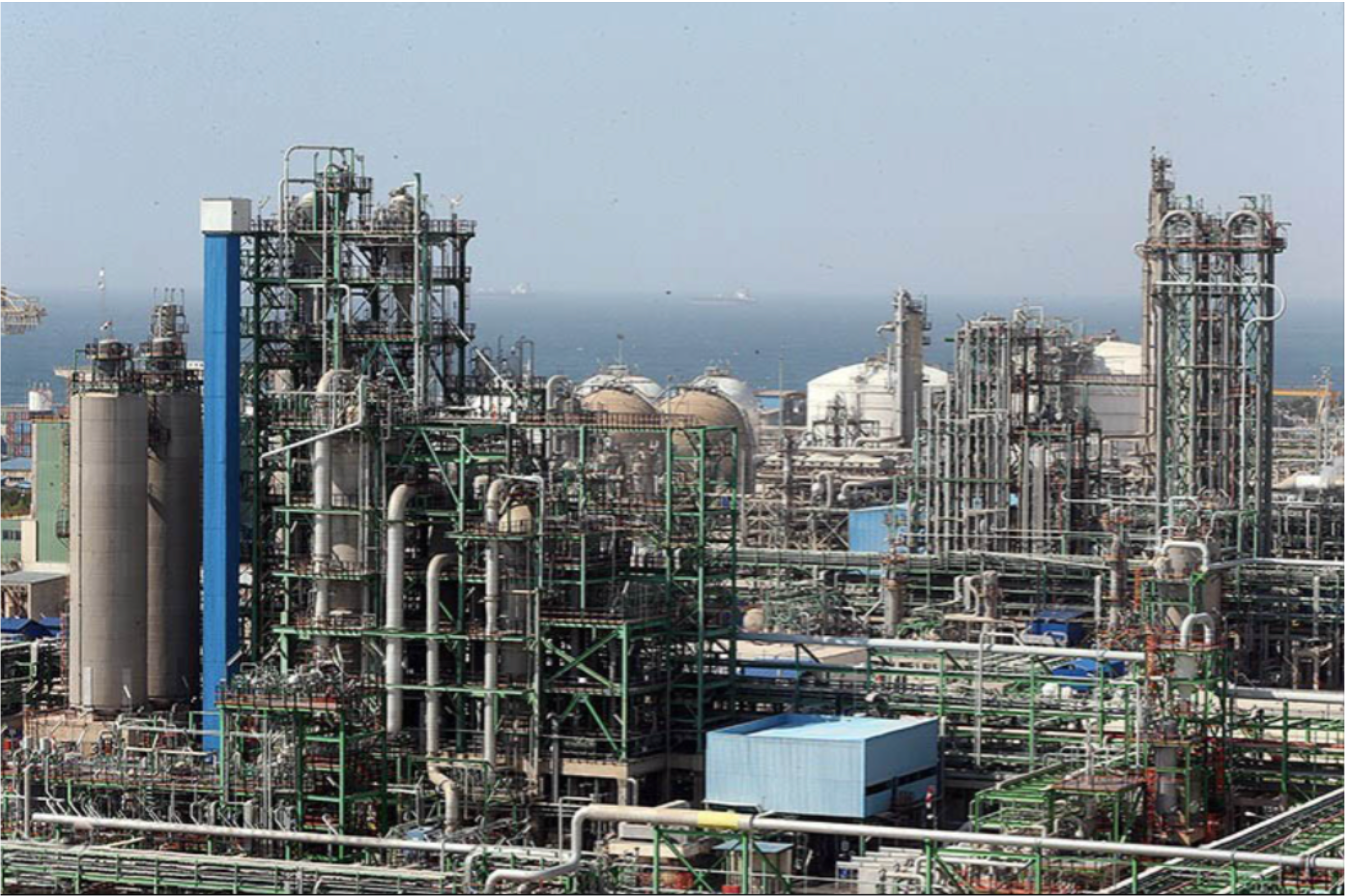
Figure 1
Iran’s economy remains deeply tied to hydrocarbon infrastructure and export flows, making energy disruption especially costly.
Source: OpenMacro
The Blockade Strategy: How It Works
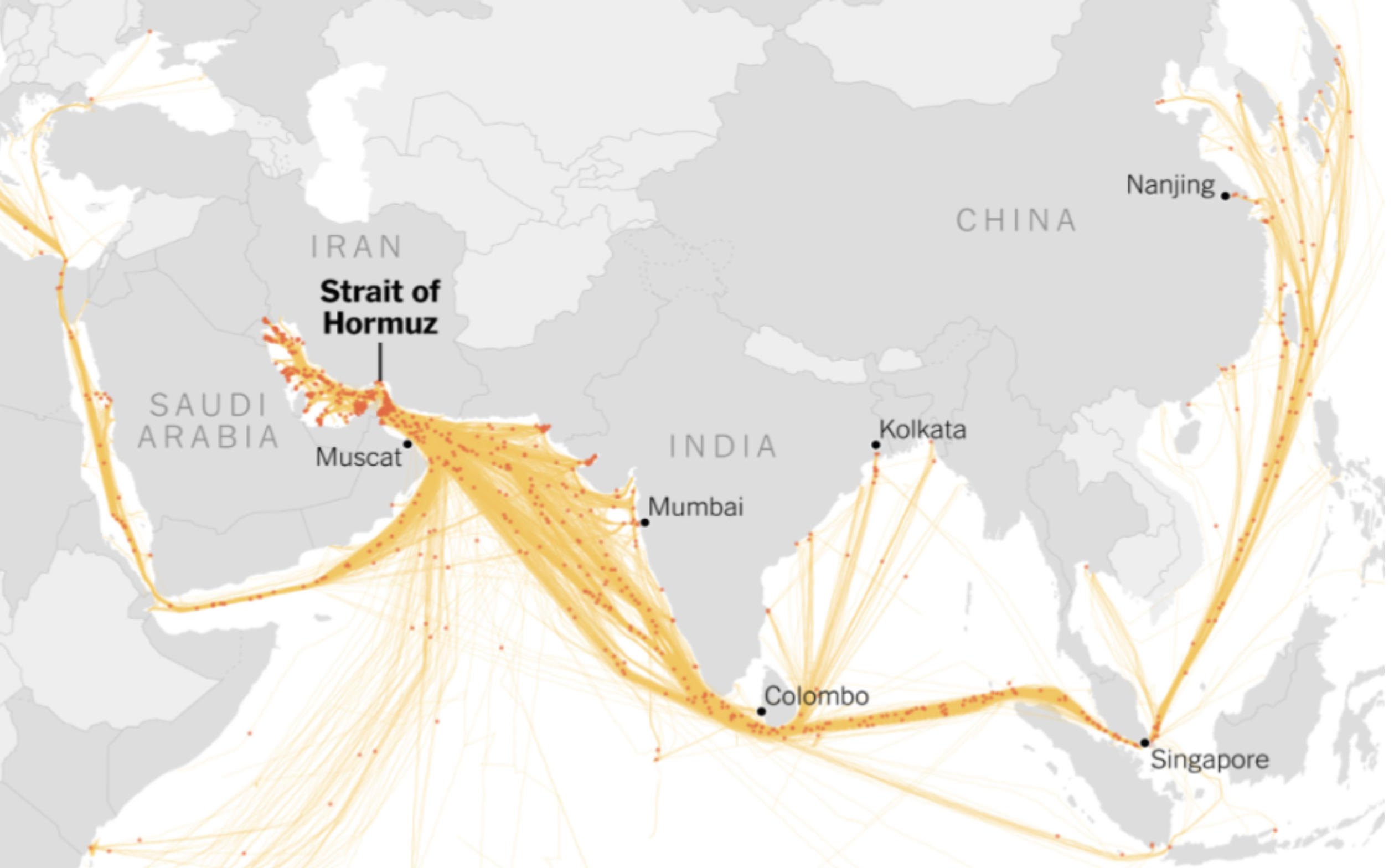
The Strait of Hormuz is a narrow chokepoint that carries roughly one-fifth of global oil flows. Recent US naval enforcement, as described in the article, sharply disrupted tanker traffic and constrained Iranian exports within days. This approach builds on earlier sanctions episodes, especially after 2018, when Iranian oil exports fell from more than 2 million barrels per day to well below prior levels at different points, forcing steep discounts and dependence on hidden trading channels.
By targeting shipping, insurance, payments, and financial settlement, a blockade or sanctions regime can raise transaction costs dramatically. Iran may still attempt to sell to buyers such as China at heavy discounts, but stronger enforcement can severely restrict even those channels. Overland routes cannot replace seaborne volumes on anything close to the same scale. The result is a near-total hit to export revenues when enforcement becomes sufficiently tight.
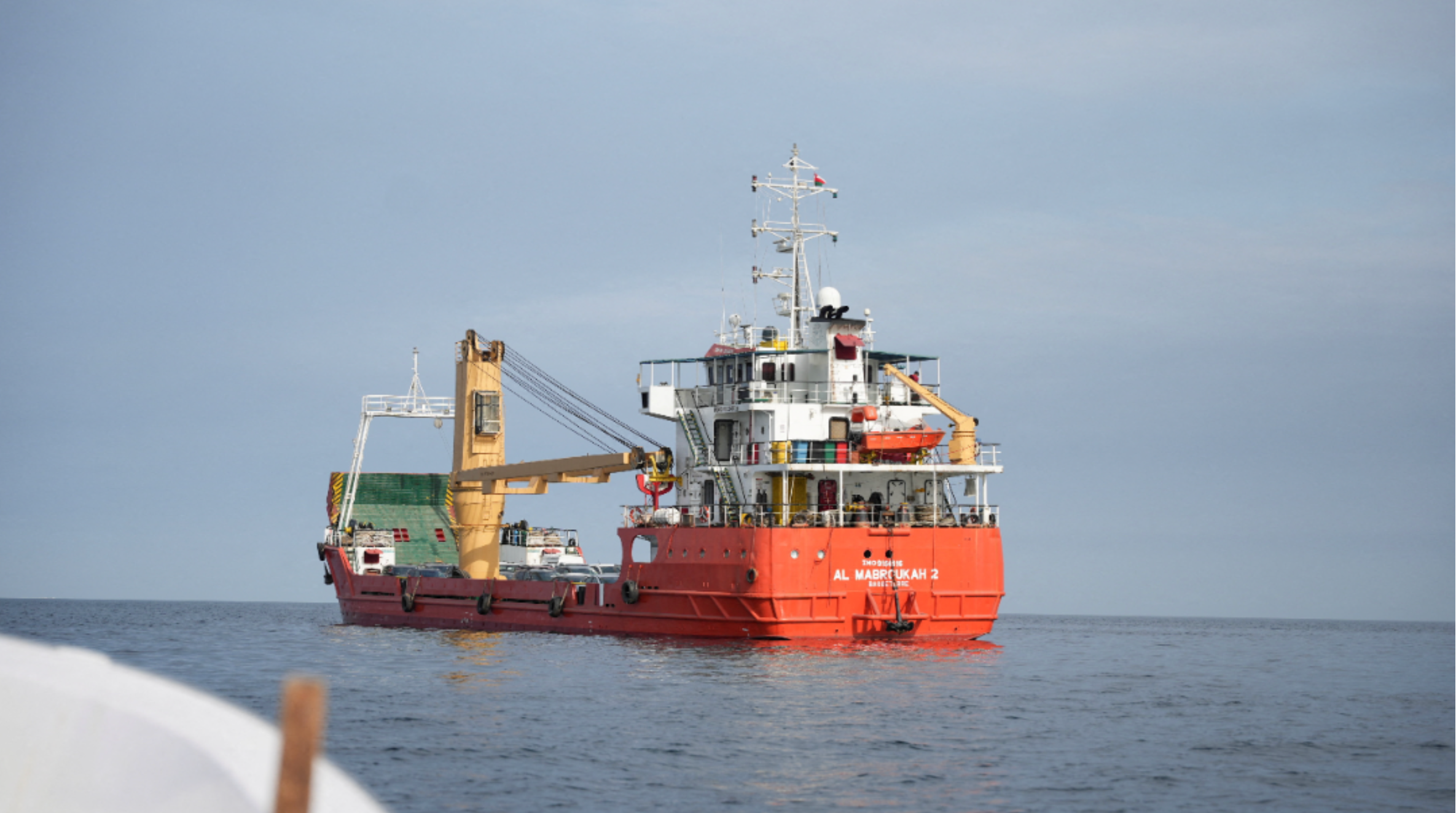
Figure 2
Because most of Iran’s oil trade is seaborne, shipping restrictions and enforcement measures can sharply reduce export flows.
Source: OpenMacro
Immediate and Long-Term Impacts on Government Revenues
A successful blockade directly damages state revenue. In many years, oil effectively funds half or more of Iran’s budget. If exports are halted or drastically reduced, monthly revenue losses quickly become severe, worsening existing fiscal shortfalls and forcing difficult tradeoffs.
That means less room for fuel subsidies, social support, infrastructure spending, and military expenditure, increasing the risk of domestic unrest. Even in earlier periods of only partial sanctions, Iran saw profits deteriorate because middlemen, smuggling costs, and discounted sales reduced the net value of each exported barrel.
Over the longer term, repeated disruptions encourage capital flight, deter investment, and deepen structural budget weakness. The government may continue drawing down state buffers and reserve vehicles, but those tools become less effective over time.
Currency Collapse: The Rial’s Downward Spiral
Iran’s rial has already experienced years of depreciation under sanctions pressure. Blocking oil exports worsens that dynamic by sharply reducing the supply of foreign currency needed to pay for imports and stabilize the exchange rate.
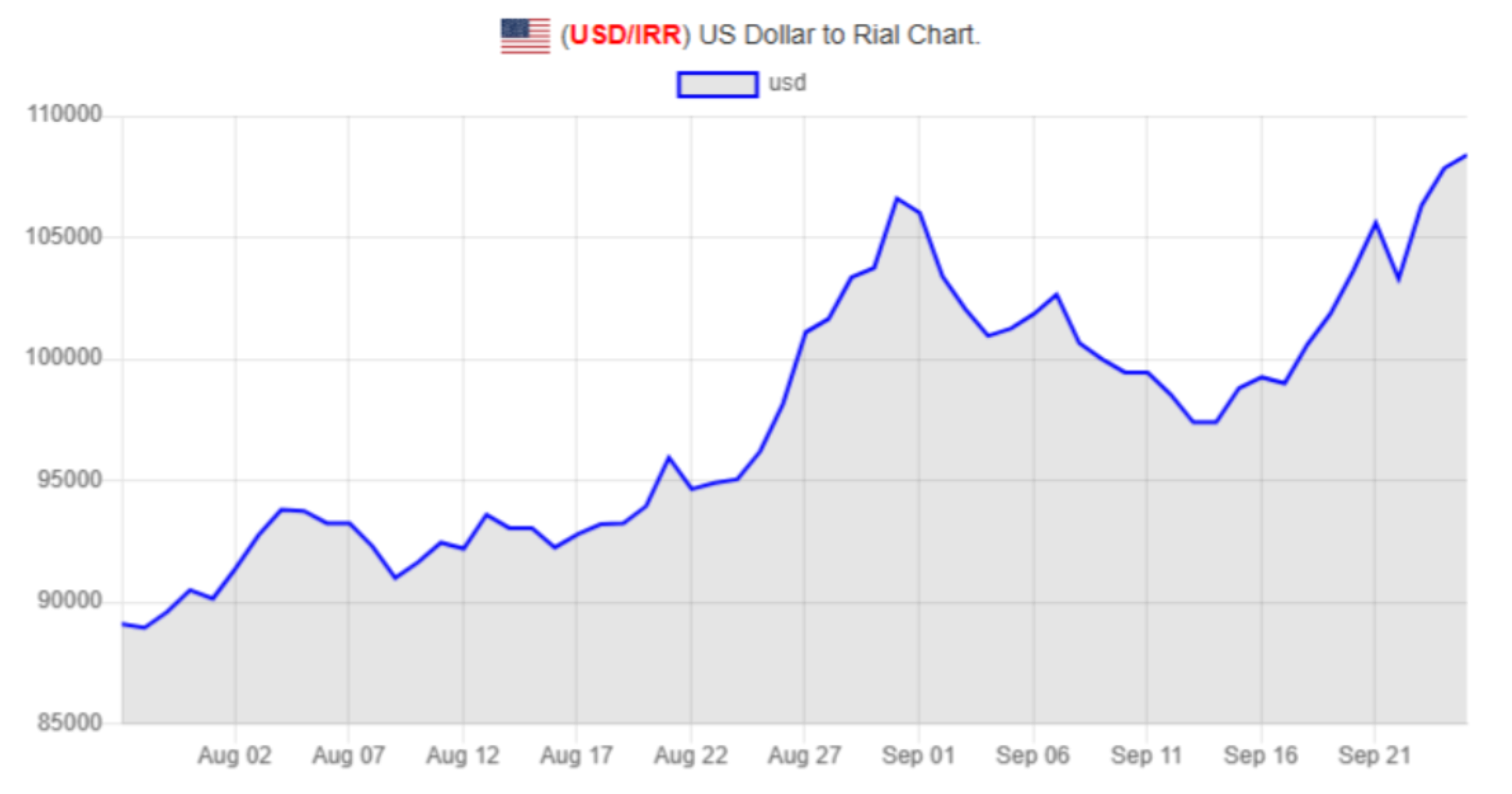
Figure 3
As oil-export revenues come under pressure, the rial faces stronger depreciation risk from falling foreign-currency inflows.
Source: OpenMacro
Without sufficient oil proceeds, the central bank loses the ability to defend the rial effectively. That drives more depreciation, raises the local-currency cost of imported goods, and feeds a vicious cycle of higher inflation and weaker confidence.
Inflation Surge: From Bad to Worse
High inflation has already become chronic in Iran, running near 40% to 50% in recent years. Oil blockades intensify inflation by reducing FX reserves and raising the cost of imported food, medicine, fuel inputs, and consumer goods. Past sanctions episodes were associated with inflation spikes and sharp losses in purchasing power. A more sustained export cutoff could push the economy toward even more destabilizing inflation dynamics as shortages and currency weakness reinforce each other.
A Viable Long-Term Strategy? Effectiveness and Risks
Blocking exports has proven effective in the short term because it attacks Iran’s clearest macroeconomic vulnerability. It can pressure Tehran without immediately destroying domestic production infrastructure, which preserves the possibility of future normalization if policy changes.
However, the strategy also carries clear risks. Iran has shown an ability to adapt through shadow fleets, discounted sales, and alternative arrangements with buyers such as China, even if those channels are costly and inefficient. Prolonged blockades also raise the risk of retaliation, humanitarian stress, and wider disruptions to global oil markets.
For maximum impact, maritime enforcement needs to be paired with financial sanctions and pressure on end-buyers, insurers, and intermediaries. Even then, the long-term result may be adaptation rather than capitulation unless Iran’s deeper structural dependence is addressed.
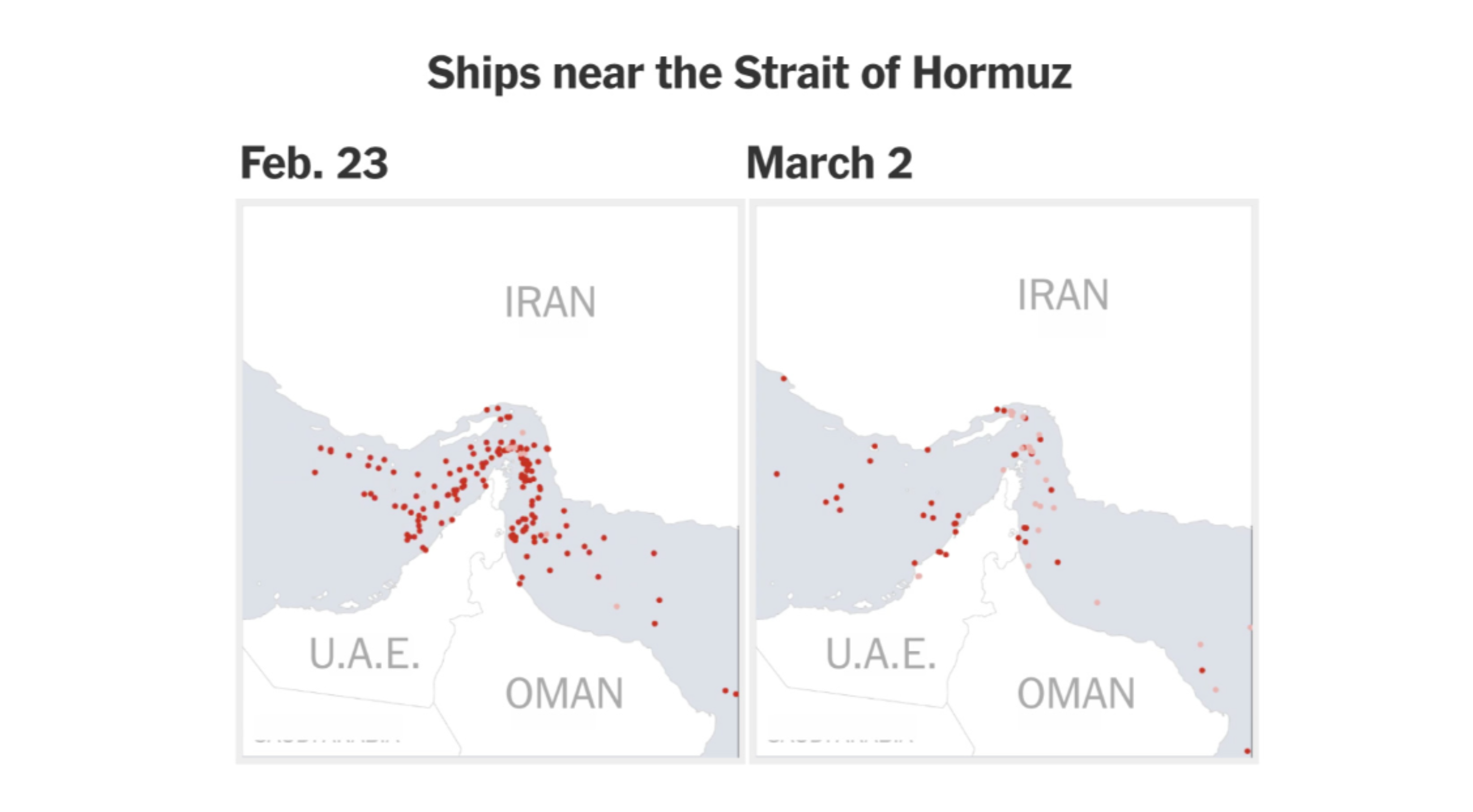
Figure 4
A sharp drop in ship traffic near the Strait of Hormuz illustrates how quickly enforcement can choke off maritime trade flows.
Source: OpenMacro
Conclusion: High Stakes for Iran’s Economy
A strategy of blocking Iran’s oil exports exploits the country’s core economic vulnerability. In the short run, it can sharply reduce revenues, weaken the rial, and accelerate inflation. Over the long term, it can deepen fiscal instability, worsen capital flight, and increase the risk of broader social and economic breakdown.
Yet the strategy’s success depends on sustained enforcement, international coordination, and the extent to which Iran can continue to evade restrictions. The events of 2026 show that it is a powerful tool, but also one with significant regional and global consequences. Iran’s long-term outlook will depend on whether it can reduce its dependence on oil exports or continue trying to absorb repeated external shocks.