
Weekly Insights: Private vs Public Markets
Why investors are increasingly allocating to private markets in search of consistent, risk-adjusted returns
OpenMacro
Private markets have historically outperformed public markets, supported by active ownership, lower volatility, and long-term value creation. This Weekly Insights edition explores why investors increasingly allocate to private equity within diversified portfolios.
In this second series of introductory articles aimed at helping our readers gain a clearer understanding of the often-mysterious world of investing in private markets, we are analysing why investors across the globe are now choosing to invest in private markets , in comparison to public market equivalents, in search of consistently higher and sustainable returns.
Why investors are flocking to private markets in search of consistently higher returns in search of consistently higher returns
Consistent outperformance
While the benefits of investing in private markets have often gone under the radar in comparison to their much more publicised public market rivals, extensive research shows how private markets, and in particular private equity, have consistently outperformed their public equivalents since the start of the 21st century.
Potential for higher, risk-adjusted returns
Investments in private companies offer the potential for higher risk-adjusted returns than investments in quoted companies listed on public markets. Target private investments returns vary depending on the specific investment strategy and whether the investment is direct or through a fund structure, but typically they will be around 2.0x–5.0x capital returns within five years. Often there will be an opportunity for upside.
Private markets exhibit a low correlation with public market investments, thereby offering the potential to diversify an investment portfolio effectively. Unlike listed companies, private companies are valued less frequently, and the illiquid nature of such investments implies that holdings are more likely to be sold when conditions are optimal, as determined by the manager, rather than being influenced by herd mentality movements that impact the value of public market companies.
Furthermore, privately held companies can adopt a longer-term perspective compared to publicly held companies. This enables them to focus on executing a value creation strategy without being constrained by the short-term demands of shareholders in public companies.
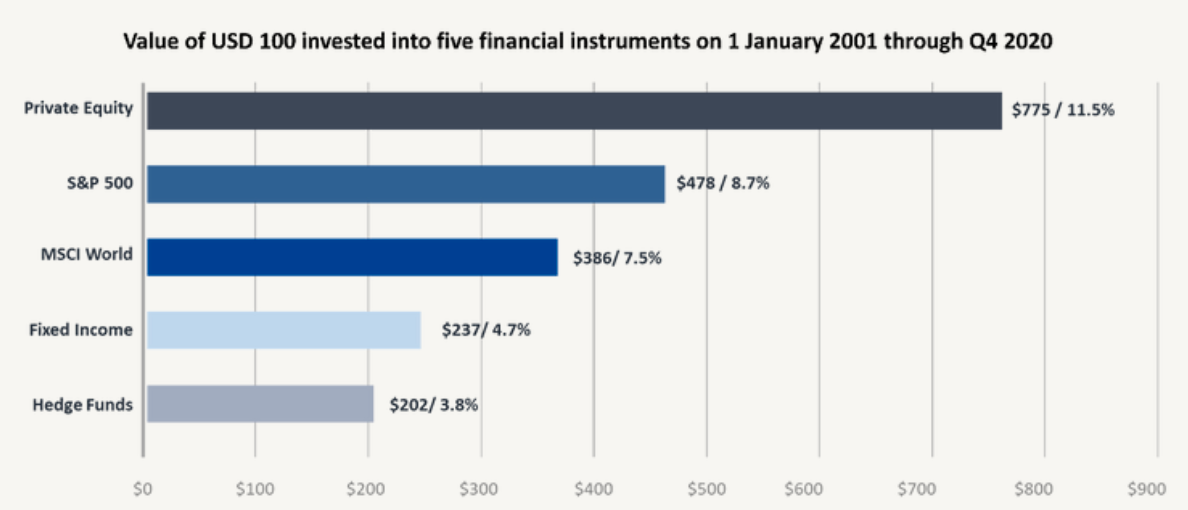
Figure 1 - How global private equity has consistently outperformed various asset classes (2001 – 2020)
Source: Astant Global
Volatile public markets
Given the ability to easily access public markets, it’s no surprise to see investors continue to select public market options despite the obvious drawbacks. One of the major obstacles when investing in this space is the inherent volatility associated with public markets. This often leads to investors becoming fully exposed to unforeseen events – we only have to look at the last two years to see how dramatic events can instantly change the economic landscape – and while there can be big winners when public valuations fluctuate wildly, there are undoubtedly losers who will see their investments rapidly disappear.
Private Markets, on the other hand, has indicated its ability to successfully weather, and indeed prosper, during uncertain economic climates. Following the Global Financial Crisis of 2008, private equity demonstrated its premium by bouncing back strongly and outperforming public markets in the following decade.
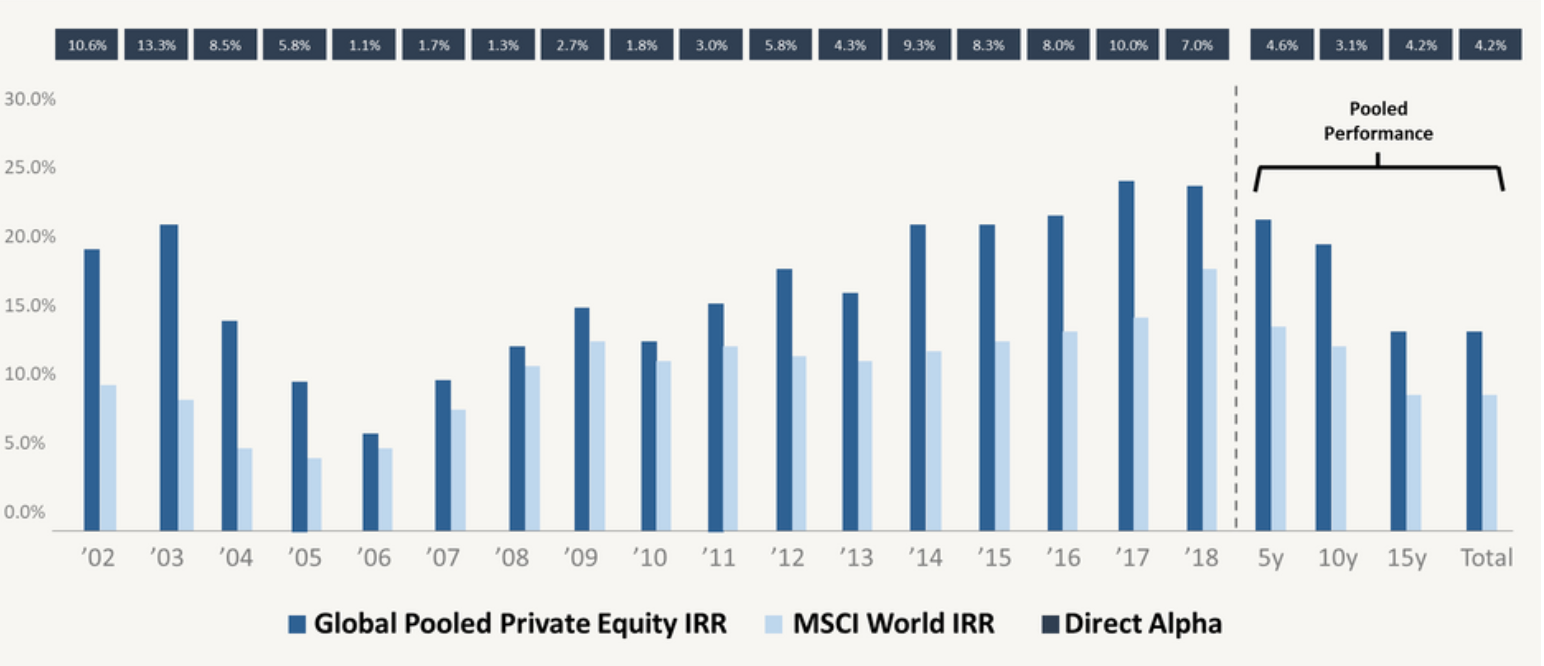
Figure 2 - How private equity has consistently outperformed its public market equivalents (2002 – 2018)
Source: Astant Global
Active, expert ownership
Private investments allow the investor a much higher degree of control versus an investment in a public company. This means private investors can supplement management’s expertise with its own experience and personnel when it comes to enacting a growth strategy, entering new markets, or reacting to adverse events.
In our own direct private investments spectrum we usually appoint a non-executive director and/or Chair and always take a board observer position. Like other private equity investors we are able to support management with access to follow-on funding, if required after the initial transaction. And we can connect management with our vastly experienced network of professionals, many taken from our own client base.
Global private equity fund pooled, absolute and relative performance against the MSCI World index for 17 vintage years and 4 pooled aggregates – all in USD. MSCI World IRR is inferred from the absolute performance and the direct alpha. Total is representative of the since inception figures. Private Equity data sourced from Burgiss covers vintages 2002–2018, 2,209 funds, and USD 2,399 billion in market capitalization. Private equity strategies include: Buyout, VC (Late), VC (Generalist), and Expansion Capital. Indexes are unmanaged and one cannot invest directly in an index. Past performance does not guarantee future returns.
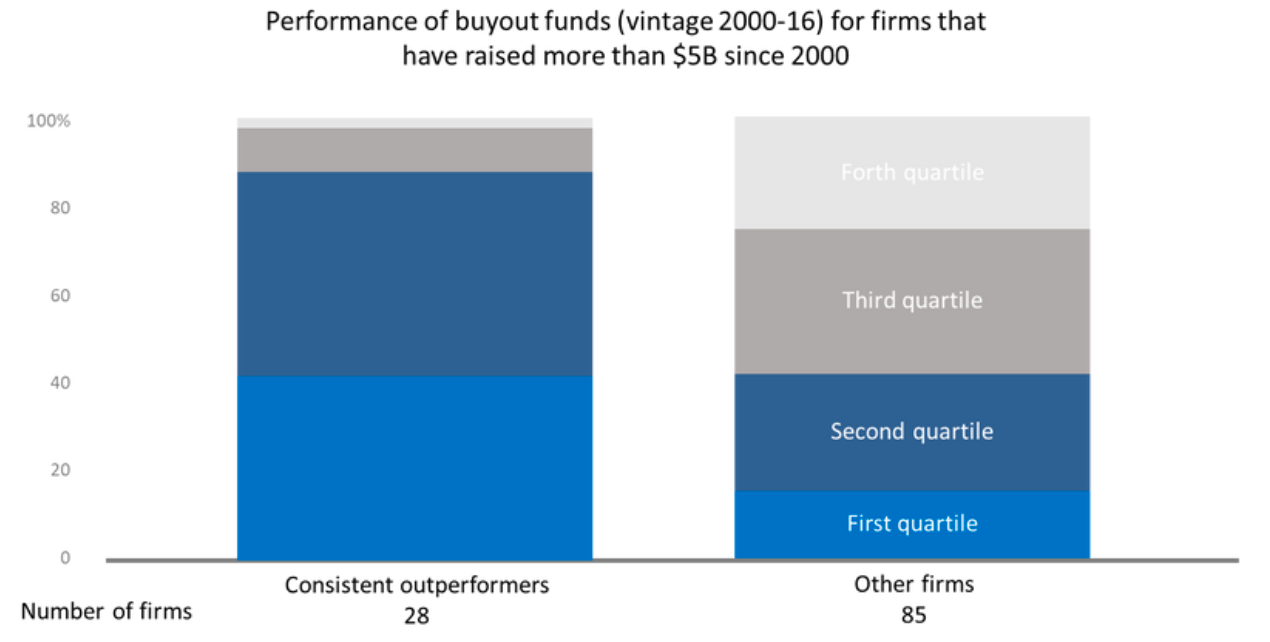
Figure 3 - It is possible to consistently outperform in private markets ? (2000 – 2016)
Source: Astant Global
This figure underscores the consistently remarkable performance exhibited by top quartile private equity firms. The data unequivocally demonstrates the enduring strength and persistence of performance among top-tier managers in the private equity landscape. This substantiates the notion that investing with top-tier managers consistently yields outperformance.
These findings not only offer further substantiation for the overall outperformance of private equity but also underscore the critical importance of gaining access to and investing with seasoned private equity managers boasting a proven track record. By aligning with such experienced managers, investors can capitalize on the sustained success demonstrated by these industry leaders, thereby enhancing their chances of achieving superior returns and mitigating investment risks.
This revised version expands upon the original text, providing additional context and emphasis on the importance of partnering with top-tier private equity managers for sustained investment success.
Conclusion
In summary, this article elucidates the longstanding and consistent outperformance of private markets compared to public markets over an extensive time horizon. Despite its track record of success, one prevalent critique has been the limited and often restrictive access to investing in private markets.
However, the landscape is evolving, and Astant Global Management stands at the vanguard of this transformative movement. We are spearheading efforts to democratize access to private markets, empowering both individual investors and wealth managers alike.
By dismantling the once-formidable barriers to entry, we are democratizing investment opportunities, thereby enabling a broader spectrum of investors to partake in the undeniable benefits of private market investing. Through our innovative strategies and forward-thinking approach, we are paving the way for a more inclusive and equitable investment landscape, where the rewards of private market investments are within reach for all