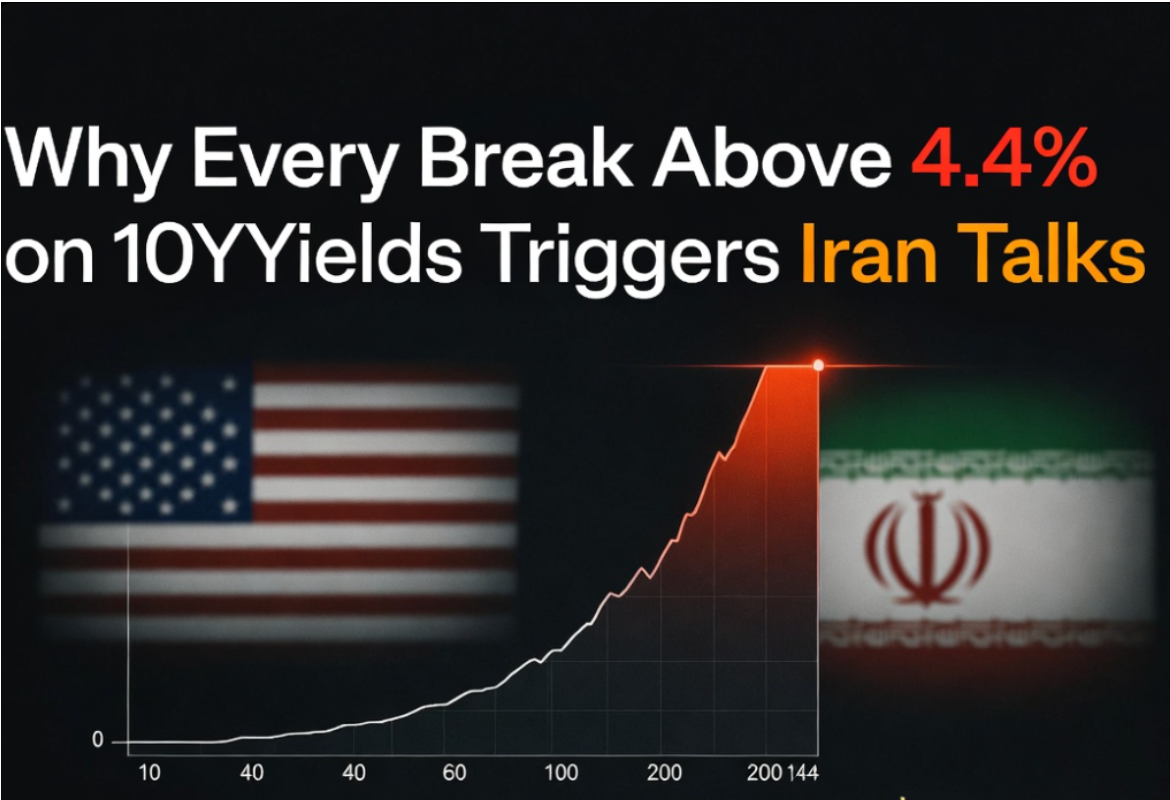
Why Every Break Above 4.4% on 10-Year US Yields Triggers Iran Negotiations
The 4.4% threshold on the 10-year Treasury has become a key line where geopolitics, rate-cut expectations, and risk appetite collide.
OpenMacro
Each move above 4.4% in the 10-year US Treasury yield appears to threaten the market’s rate-cut narrative, increasing pressure for geopolitical de-escalation. The result is a pattern in which Iran negotiation headlines seem to emerge just as yields begin to endanger the equity rally.
Wall Street has a new fear level: 4.4% to 5% on the 10-year US Treasury yield. Cross that invisible line and suddenly “productive negotiations with Iran” announcements appear almost on cue.
The reason is simple and mechanical. Above 4.4%, rate-cut expectations collapse. Those expected Federal Reserve cuts have been the primary fuel for the equity bull market since mid-2025. When yields threaten to price out the cuts, the entire risk-on narrative begins to unravel.
Analyst Marcos Agustín connects the dots: every time the 10-year yield breaches the zone, diplomatic breakthroughs with Tehran are telegraphed to markets within hours. The message to traders is clear: the administration will prioritize lower yields and sustained risk appetite over prolonged confrontation.
This pattern reveals how deeply intertwined geopolitics and monetary policy have become. For WebApp users building macro dashboards, the 4.4% level on the 10-year is now a must-watch threshold. Pair it with DXY moves and crude oil prices, and you have a real-time risk-off warning system that has proven remarkably reliable.
In today’s market, diplomacy is no longer just foreign policy; it is also yield-curve management.